
Directional Antenna
Engineered to focus RF energy in a specific direction, directional antennas are essential components in applications requiring targeted signal transmission and reception. By concentrating power in one direction, they improve range, signal strength, and interference rejection compared to omnidirectional counterparts.
Directional Antenna by MCV
MCV directional antennas are designed for high-performance operation across a wide frequency range. Available in a variety of form factors and gain levels, they are ideal for point-to-point communication, signal monitoring, and coverage enhancement. Built to withstand harsh environmental conditions, our antennas are housed in rugged enclosures and support applications in telecommunications, defense, wireless infrastructure, and industrial networks.
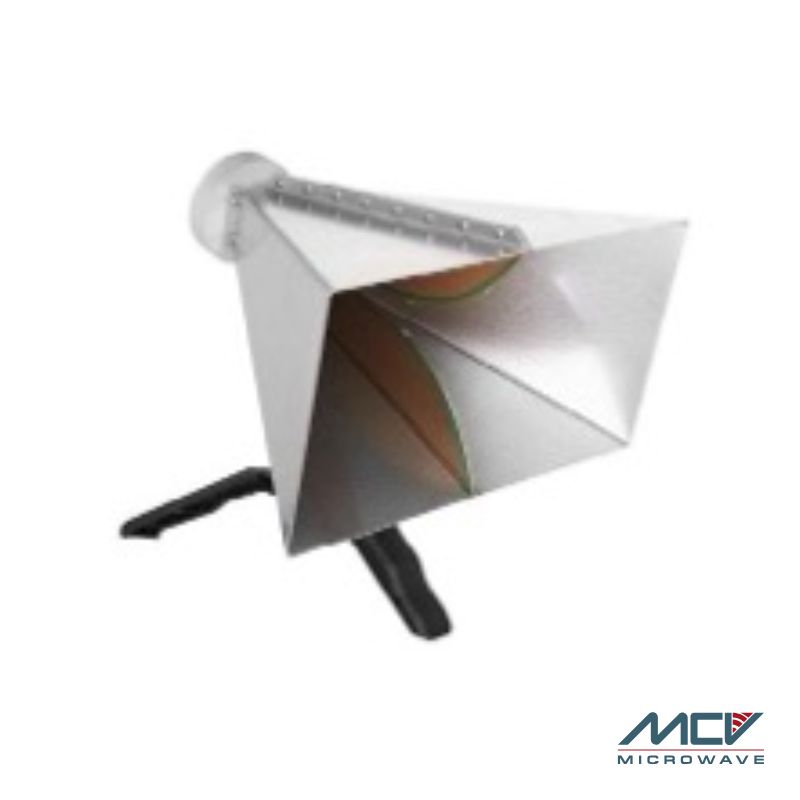
FAQ about Directional antennas
What is a directional antenna?
A directional antenna is designed to transmit or receive radio signals more strongly in one specific direction rather than equally in all directions. This focused pattern increases range and signal strength in the desired direction.
How does a directional antenna differ from an omnidirectional antenna?
-
Directional antennas focus energy in one direction, providing higher gain and longer range.
-
Omnidirectional antennas radiate energy equally in all horizontal directions, offering wider coverage but lower gain.
What are common types of directional antennas?
Some popular types include:
-
Yagi-Uda antennas – used for television, amateur radio, and Wi-Fi links.
-
Parabolic dish antennas – for satellite communication and radar.
-
Panel antennas – often used in cellular base stations and Wi-Fi access points.
-
Horn antennas – used in microwave and test applications.
What is antenna gain and why is it important for directional antennas?
Antenna gain (measured in dBi) quantifies how much power is focused in a particular direction. Higher gain antennas provide longer range and better signal quality, but their beamwidth becomes narrower, requiring precise alignment.
What is beamwidth?
Beamwidth is the angular width of the main signal lobe where the antenna radiates or receives most of its energy.
-
Narrow beamwidth = higher gain, longer range, more directionality.
-
Wide beamwidth = lower gain, broader coverage area.
Where are directional antennas commonly used?
Directional antennas are used in:
-
Point-to-point communication links (e.g., Wi-Fi bridges)
-
Satellite communication systems
-
Radar systems
-
Broadcast and TV reception
-
Cellular networks
-
Military and surveillance applications
How do you align a directional antenna?
Alignment involves pointing the antenna toward the intended signal source or receiver using:
-
A compass, GPS, or laser sight for coarse alignment
-
Signal strength meters or software tools for fine-tuning the orientation
What materials or obstacles affect directional antenna performance?
Performance can degrade when signals are blocked or reflected by:
-
Buildings, trees, or mountains
-
Metal structures
-
Thick walls or reinforced concrete
-
Weather conditions (for higher frequencies like microwave or mmWave)
Can directional antennas be used indoors?
Yes, but their benefits are limited indoors because signals reflect and scatter off walls and objects. They are best used when line-of-sight communication is available or when targeting a specific device or area.
How does polarization affect directional antenna performance?
Polarization refers to the orientation of the radio wave (horizontal, vertical, or circular). For best performance, the transmitting and receiving antennas must have matching polarization. Mismatched polarization can cause significant signal loss.
What is line-of-sight (LOS) and why is it important for directional antennas?
Line-of-sight means there are no physical obstructions between the transmitting and receiving antennas. Directional antennas rely heavily on clear LOS; obstacles can severely reduce signal strength, especially at higher frequencies.
How far can a directional antenna transmit or receive signals?
Range depends on several factors, including antenna gain, transmission power, frequency, environmental conditions, and line-of-sight. Higher gain and clear LOS generally result in longer communication distances.
Do directional antennas require special mounting or support structures?
Yes. Because directional antennas must remain precisely aligned, sturdy mounting hardware such as masts, brackets, or towers is often required. Outdoor installations should also account for wind load and weather exposure.
Are there legal or regulatory limits when using directional antennas?
In many regions, regulatory bodies limit maximum transmit power and effective isotropic radiated power (EIRP). Using a high-gain directional antenna may require reducing transmitter power to stay within legal limits.
What factors should be considered when choosing a directional antenna?
Key considerations include:
-
Frequency band (e.g., 2.4 GHz, 5 GHz, 900 MHz)
-
Gain and beamwidth required
-
Range and line-of-sight conditions
-
Mounting options
-
Environmental durability (for outdoor use)
How can I order directional antenna from MCV Microwave?
To place an order for directional antenna or any other RF antenna please contact us and we will help you!