
RF FILTERS
Precision, reliability & optimal performance with RF filters
We offer a wide range of high-performance RF filters designed to meet the diverse needs of various industries. Our filters are engineered to ensure precision, reliability, and optimal performance in challenging environments.
-
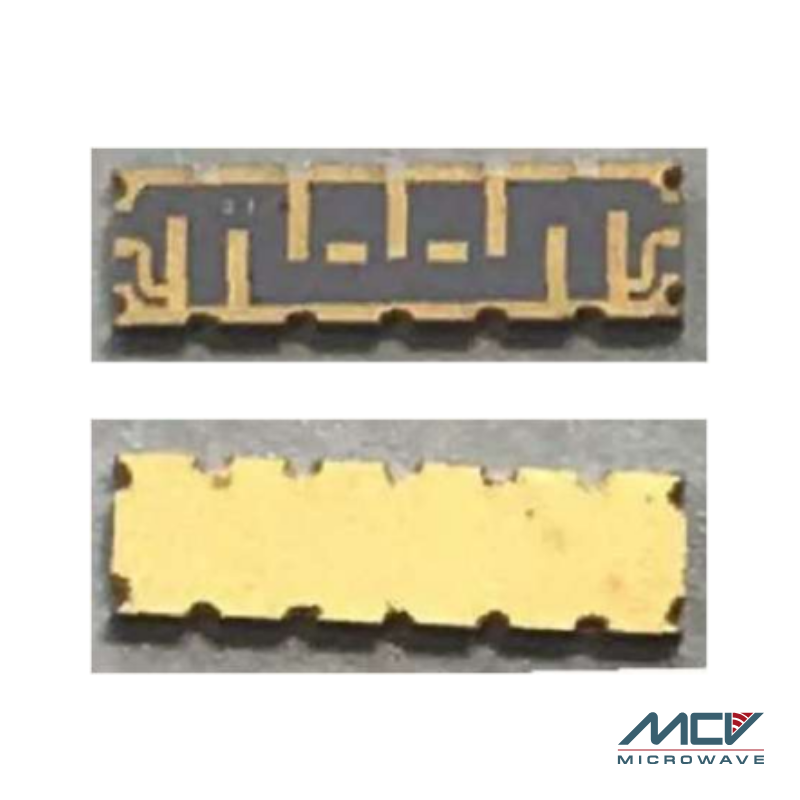
Planar Filters: MCV ceramic planar filters are available in various high K substrates with consistent yield in mass production and excellent quality.
-
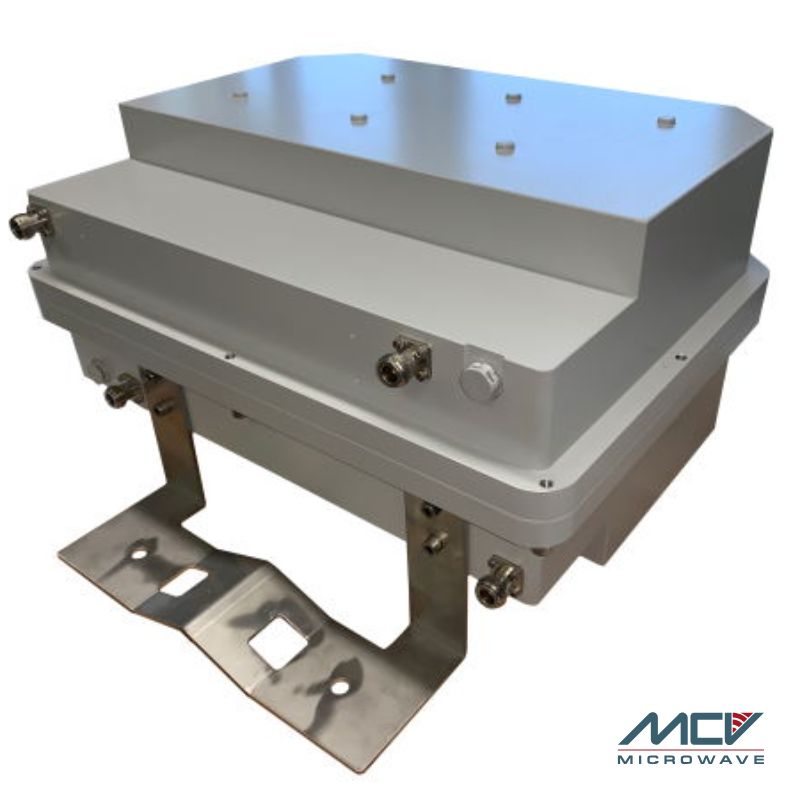
Cavity Filters: Ideal for applications requiring exceptional selectivity and power handling, our cavity filters deliver outstanding performance in both narrow and wideband frequencies.
-
Ceramic Filters: Offering superior temperature stability and low insertion loss, ceramic filters are perfect for high-precision communication systems.
-
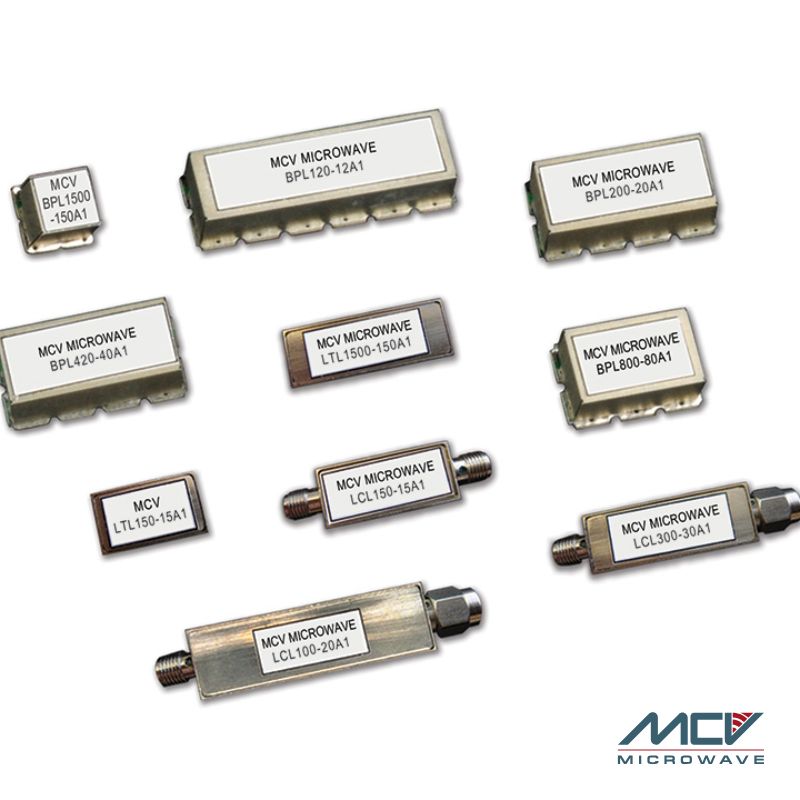
LC Filters: Known for their excellent frequency response and minimal signal distortion, LC filters are ideal for filtering unwanted frequencies in electronic circuits.
-
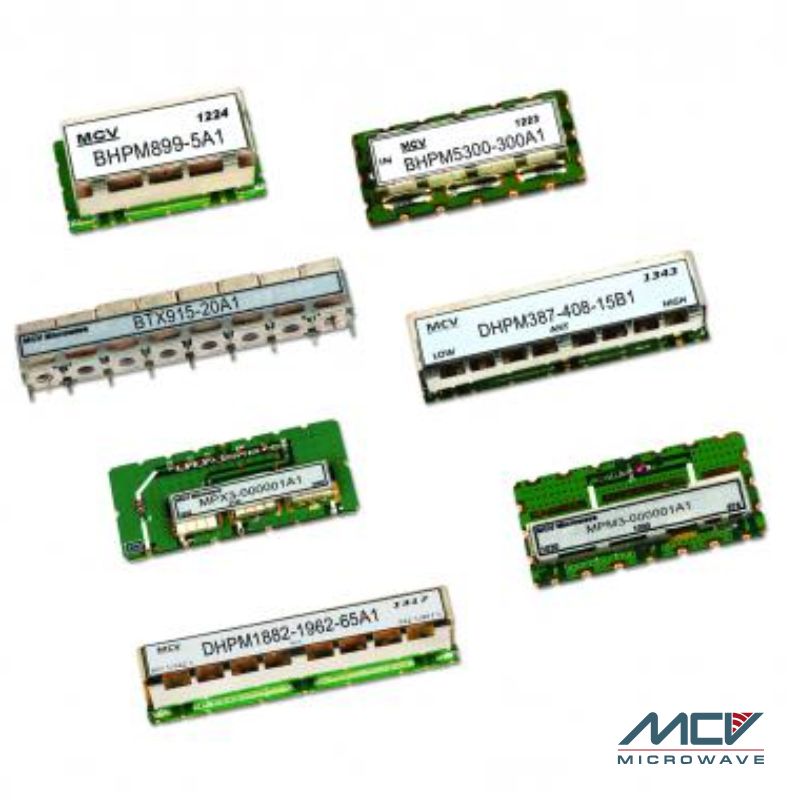
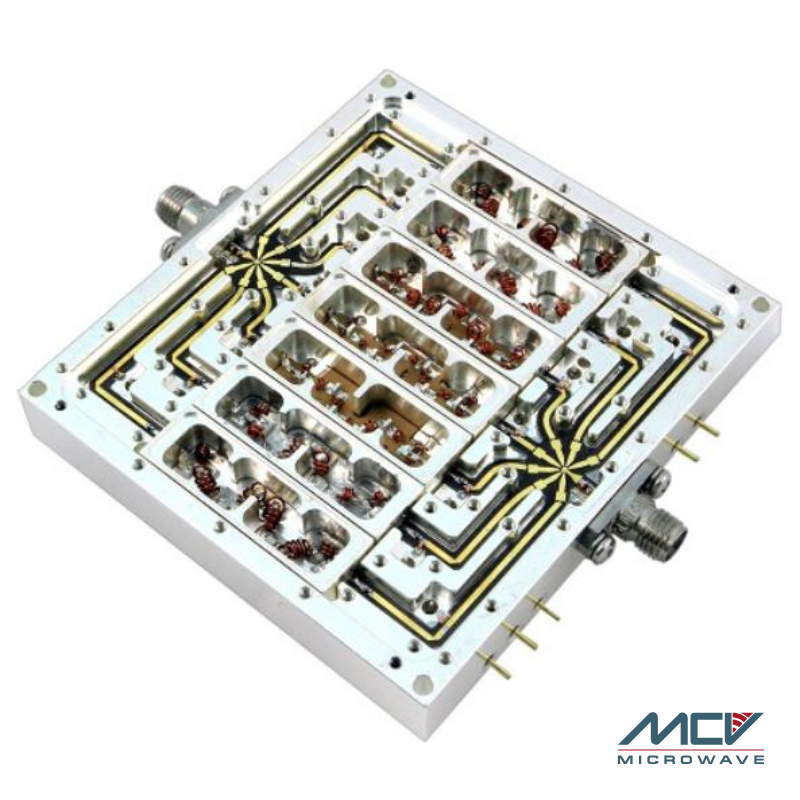
Switched Filter Banks: Our switched filter banks provide flexible frequency selection, allowing for dynamic control over filtering characteristics in complex systems.
No matter the application, our RF filters offer unmatched quality and performance. Explore our range today and find the perfect solution for your needs.
MCV Microwave RF Filters are perfect solution for your needs

FAQ about RF Filters
What is an RF filter and why is it used?
An RF (radio frequency) filter is a component used to selectively allow certain frequency bands to pass while blocking others. It helps reduce interference, improve signal integrity, and separate different RF signals in communication systems.
What types of RF filters are there?
The most common types of RF filters include low-pass, high-pass, band-pass, and band-stop (notch) filters. Each type is designed to manage specific parts of the frequency spectrum depending on the application.
In which industries are RF filters used?
RF filters are used across various industries, including telecommunications, defense, aerospace, medical technology, test and measurement equipment, and industrial IoT systems.
Why are RF filters important in communication systems?
RF filters are critical for:
-
Blocking unwanted signals (interference)
-
Separating transmit and receive paths
-
Meeting regulatory emission standards
-
Improving signal quality and performance
What is insertion loss in an RF filter?
Insertion loss measures the amount of signal power lost as it passes through the filter. Lower insertion loss means more efficient signal transmission and better filter performance.
What does return loss or VSWR mean in RF filters?
Return loss (or its reciprocal, VSWR) measures how much signal is reflected back due to impedance mismatch. A high return loss (or low VSWR) means better impedance matching and less signal reflection.
What is filter Q factor and why does it matter?
The Q factor (Quality Factor) indicates how selective a filter is around its center frequency. A higher Q means:
-
Narrower bandwidth
-
Lower insertion loss
-
Better signal selectivity
What frequency ranges do RF filters cover?
RF filters can operate from kHz to GHz, covering:
-
HF/VHF/UHF (e.g., 3 MHz to 3 GHz)
-
Microwave bands (3 GHz to 30 GHz)
-
Millimeter-wave bands (30+ GHz), depending on design and materials
Can RF filters handle high power levels?
Yes, but it depends on the design and type:
-
Cavity and coaxial filters handle higher power.
-
Ceramic and microstrip filters are more suited for low to moderate power applications.
What is the difference between a ceramic filter and a lumped element filter?
A ceramic filter uses the resonant properties of ceramic materials to filter signals and is common in compact, high-frequency applications. Lumped element (LC) filters are built from discrete inductors and capacitors, offering design flexibility and frequency tuning options.
What is the difference between an RF filter and an EMI filter?
An RF filter is designed to manage specific radio frequency signals within communication systems, while an EMI (electromagnetic interference) filter suppresses unwanted electrical noise generated by electronic devices or power lines. RF filters focus on signal selectivity and frequency control, whereas EMI filters are primarily used for noise suppression and regulatory compliance.
Can RF filters be customized for specific applications?
Yes. Custom RF filters can be designed to meet unique requirements such as:
- Specific frequency ranges
- Tight bandwidth tolerances
- High-power handling
- Miniaturized form factors
- Harsh environmental conditions
Custom designs are often used in aerospace, defense, satellite communications, and specialized industrial systems.
How are RF filters tested and verified?
RF filters are commonly tested using vector network analyzers (VNAs) to measure key parameters such as:
- Insertion loss
- Return loss / VSWR
- Bandwidth
- Rejection performance
- Group delay
Environmental testing may also include temperature cycling, vibration, humidity, and shock testing to ensure long-term reliability in demanding applications.
How do I choose the right RF filter for my application?
Choosing the right RF filter depends on several factors, including:
-
Operating frequency and bandwidth
-
Required insertion loss and selectivity
-
Power handling capability
-
Size and form factor constraints
-
Environmental conditions (temperature, vibration, humidity)
Evaluating these parameters ensures optimal performance and system compatibility.
What is group delay and why is it important in RF filters?
Group delay measures how uniformly different frequencies pass through the filter over time. Low and flat group delay is critical in digital and high-speed communication systems, as excessive variation can cause signal distortion and data errors.
Are RF filters available as standard products or custom designs?
RF filters are available in both standard and custom configurations. Standard filters suit common frequency bands and applications, while custom RF filters are designed to meet specific performance, size, or environmental requirements.
How do environmental conditions affect RF filter performance?
Temperature extremes, vibration, shock, and humidity can impact RF filter stability and reliability. High-quality RF filters are designed with robust materials and construction to maintain performance in harsh environments such as aerospace, defense, and industrial applications.
Are RF filters important in 5G and modern wireless systems?
Yes. RF filters are essential in 5G, Wi-Fi, satellite, and modern wireless systems because they help manage increasingly crowded frequency spectra. They prevent interference between adjacent frequency bands, improve signal clarity, and enable reliable high-speed data transmission in dense communication environments.
What materials are commonly used in RF filter design?
RF filters can be manufactured using several technologies and materials depending on the application, including:
- Ceramic resonators
- Cavity structures
- Coaxial components
- Microstrip PCB designs
- SAW and BAW technologies
The choice of material affects size, frequency range, power handling, insertion loss, and temperature stability.
Why choose RF filters from MCV?
MCV’s RF filters are precisely engineered for high performance across a wide frequency range. They offer low insertion loss, high selectivity, and excellent environmental durability, making them a reliable choice for both lab and field applications.
How can I order RF filters from MCV Microwave?
To place an order for RF filters please contact us and we will help you!