
Ceramic Components
Ceramics (High Q Materials)
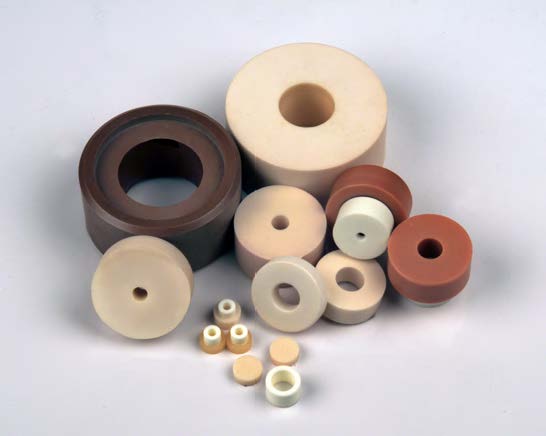
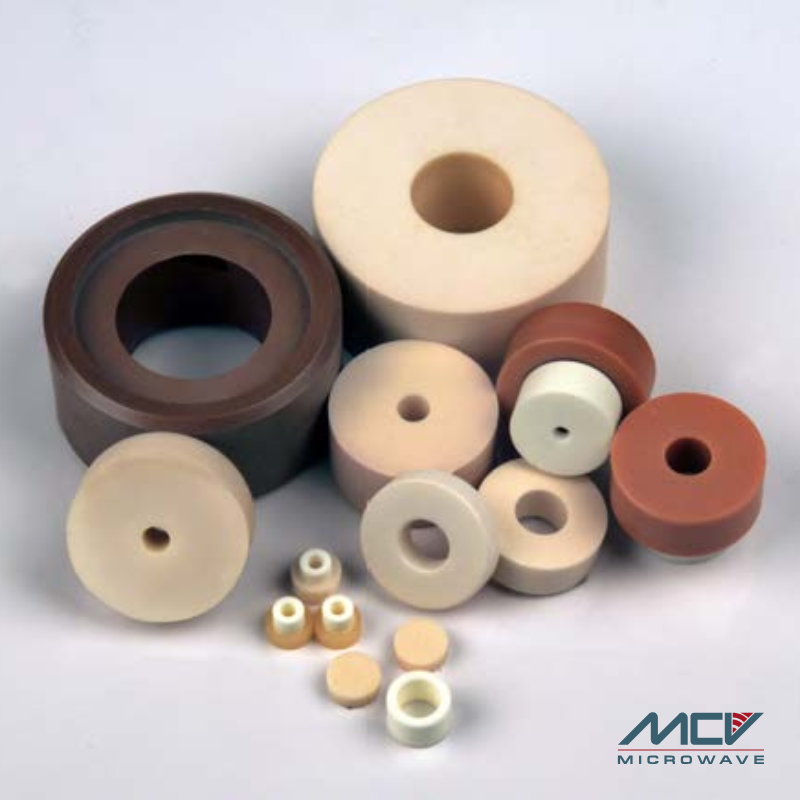
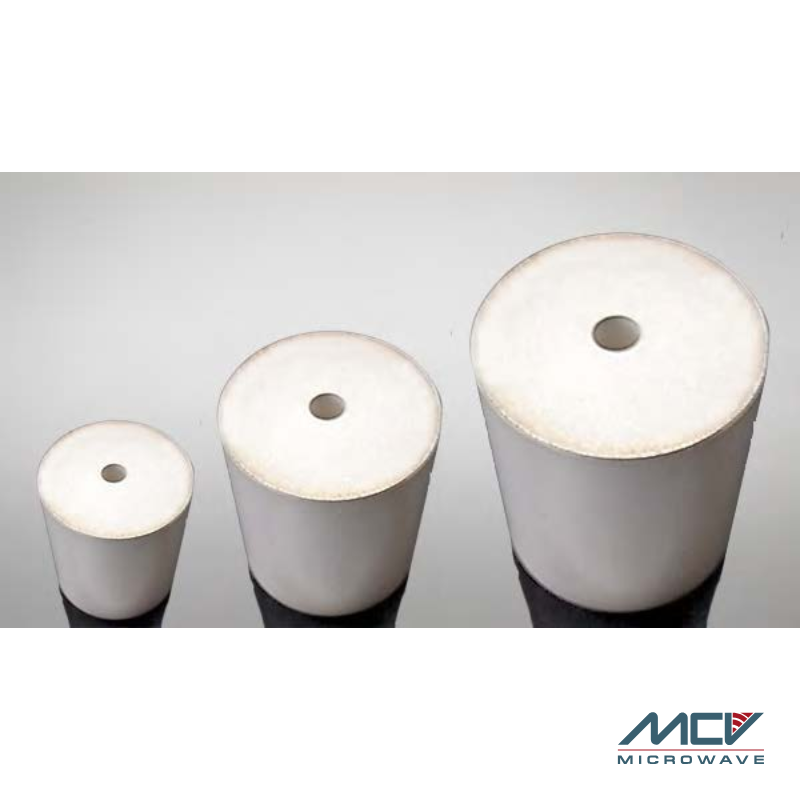
Since 1995, MCV has formulated and fabricated ceramics in-house. This provides the level of control and precision needed to produce ultra-high Q ceramic materials with dielectric constants up to 50 and Qƒ > 300,000 @10 GHz. Our material science expertise forms the basis for our high-performance ceramic filter and duplexer, resonator, antenna, and substrate products.
Design
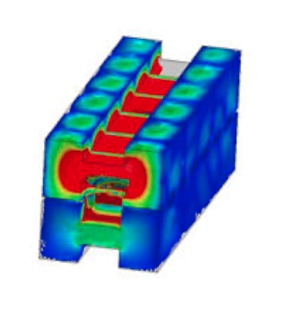
Utilizing 3D EM simulation tools and design rules, our design expertise spans the range of RF/microwave applications with a focus on ceramic monoblocks and waveguides, stripline, and dielectric resonator loaded cavity filters. Our testing platforms can match the requirements for the specific application.
Processing and Manufacturing
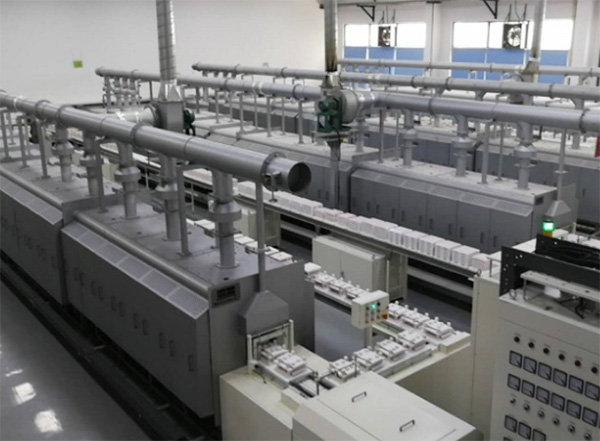
Our ceramics processing and metal machining lines offer a range of capabilities including:
- Forming
- Thin Film Metallization
- Machining
- Lapping/Polishing/Dicing
Products
Our commercial off-the-shelf products are the result of our materials science and RF/microwave design competencies. Our key product lines include:
- Ceramic monoblock and discrete filters, duplexers and multiplexers
- Cavity filters, duplexers/diplexers, including low PIM and ultra-compact
- Lumped element (LC) filters, duplexers and multiplexers
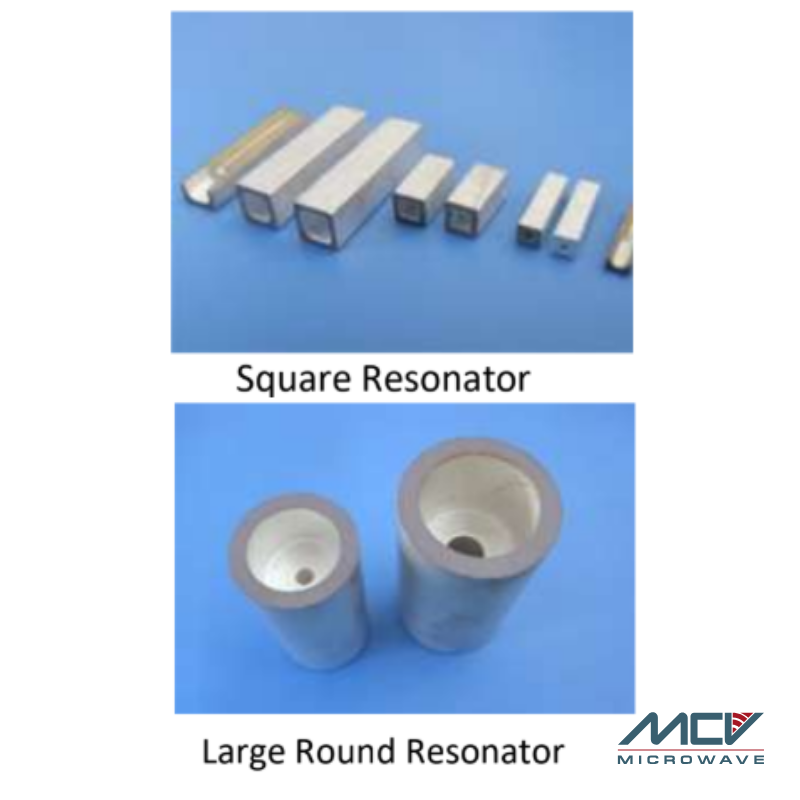
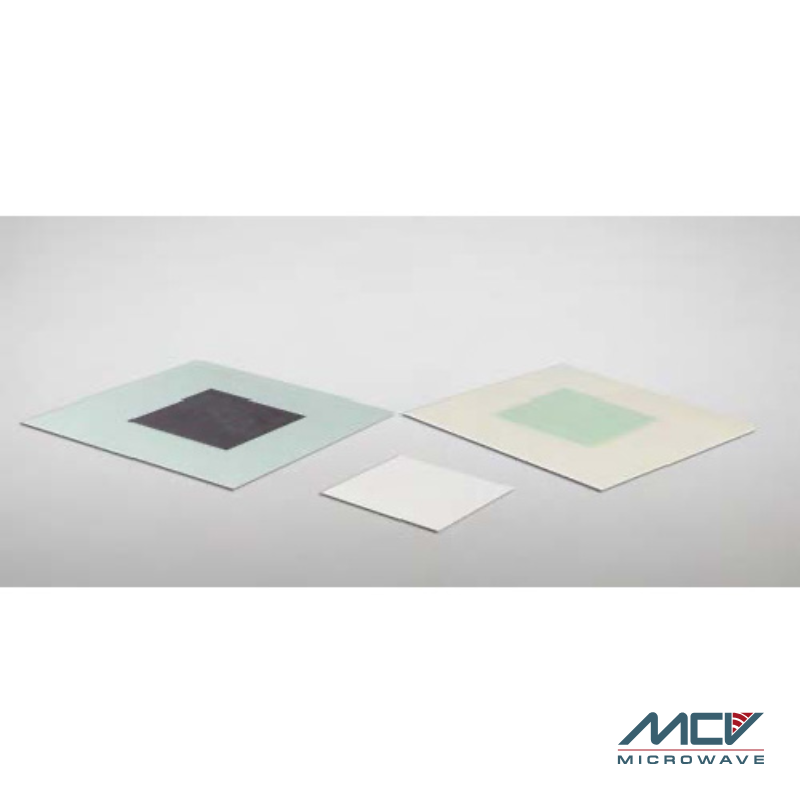
- Resonators (TE/TM/TEM mode) and substrates
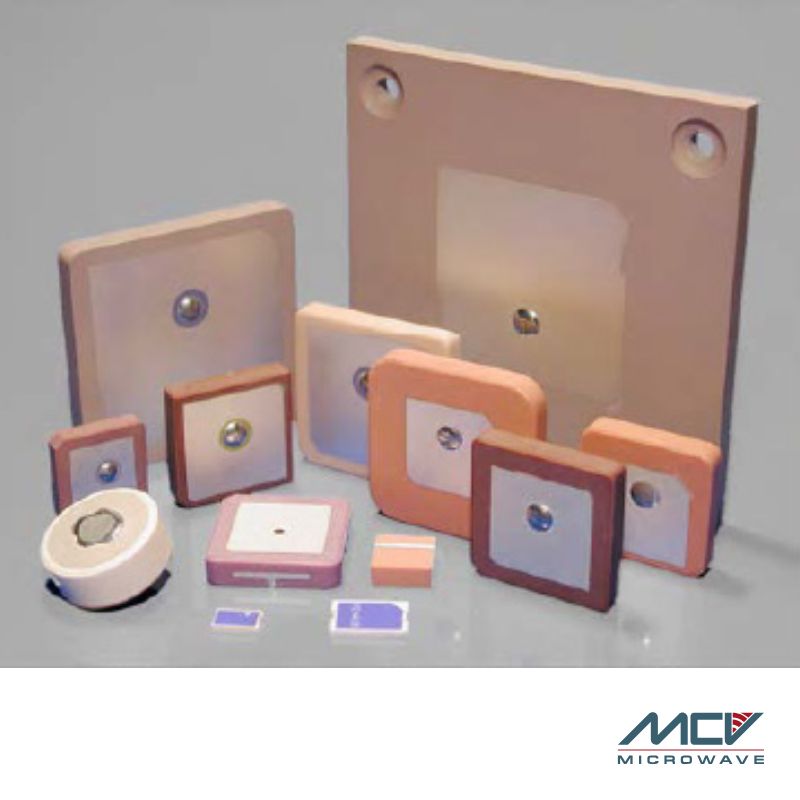
- Dielectric Patch antennas

FAQ about Ceramic Components
What are ceramic components in RF solutions?
Ceramic components are passive electronic parts made from dielectric ceramic materials that are used in RF and microwave circuits. They include capacitors, filters, resonators, antennas, and substrates designed for high-frequency performance and thermal stability.
Why are ceramics used in RF and microwave applications?
Ceramics offer high dielectric constants, low dielectric losses, excellent temperature stability, and mechanical robustness. These properties make them ideal for maintaining signal integrity and minimizing losses at high frequencies.
What types of ceramic materials are commonly used in RF components?
Common materials include alumina (Al₂O₃), zirconia (ZrO₂), titanates, and ferrites. Each material provides specific benefits in terms of dielectric constant, Q-factor, and thermal properties, depending on the application.
What are the main types of ceramic RF components?
Key types include:
-
Ceramic capacitors
-
Dielectric resonators
-
Bandpass filters
-
Baluns
-
Antenna substrates
-
Feedthroughs and insulators
How do ceramic materials affect RF performance?
The dielectric constant (εr) and loss tangent (tan δ) of the ceramic determine impedance, signal speed, and energy loss. Low-loss ceramics improve Q-factor and efficiency in filters, oscillators, and antenna circuits.
What are the advantages of ceramic-based RF filters?
Ceramic RF filters provide:
-
High selectivity and low insertion loss
-
Compact form factor
-
Excellent temperature and frequency stability
-
Suitability for both mobile and satellite communication systems
How are ceramic resonators different from quartz crystals?
Ceramic resonators are smaller, lower-cost alternatives to quartz crystals, with slightly lower frequency precision but sufficient stability for many RF and timing applications (such as in wireless modules and remote controls).
Can ceramic components handle high power in RF systems?
Yes, many ceramic components can handle high RF power due to their good thermal conductivity and low dielectric loss. However, power handling depends on the specific ceramic composition and design.
How are ceramic RF components manufactured?
They are typically made using powder pressing, sintering, and metallization techniques. Advanced designs may use low-temperature co-fired ceramics (LTCC) or high-temperature co-fired ceramics (HTCC) for multilayer circuit integration.
What are common applications of ceramic components in RF systems?
Ceramic RF components are used in:
-
5G base stations and small cells
-
Wi-Fi and Bluetooth modules
-
Satellite and GPS systems
-
Radar and defense electronics
-
IoT devices and RF front-end modules
How do engineers select the right ceramic component for an RF application?
Selection depends on operating frequency, dielectric constant, Q-factor, power handling, temperature stability, and physical size. Application-specific requirements such as bandwidth, insertion loss, and environmental conditions also play a key role.
How do ceramic RF components compare to SAW and BAW devices?
Ceramic components generally offer higher power handling, better thermal stability, and broader frequency coverage, while SAW and BAW devices provide very high selectivity and are often used in compact mobile RF front ends. The choice depends on frequency range, size constraints, and performance requirements.
Are ceramic RF components suitable for harsh or outdoor environments?
Yes, ceramic materials are inherently resistant to moisture, chemicals, and temperature extremes. This makes them well suited for automotive, aerospace, defense, and outdoor telecommunications applications.
Can ceramic RF components be customized for specific frequencies or systems?
Many ceramic RF components can be custom-designed or tuned to specific frequency bands, bandwidths, and impedance requirements. Customization is common in filters, resonators, and antenna substrates for specialized RF systems.
How do ceramic components contribute to miniaturization of RF systems?
Their high dielectric constants allow circuits to be physically smaller while maintaining electrical performance. Multilayer ceramic technologies such as LTCC enable integration of multiple RF functions into compact, high-density modules.
How can I order ceramic components from MCV Microwave?
To place an order for ceramic components please contact us and we will help you!