
RF Connectors
Engineered to enable secure, high-frequency signal transmission, RF connectors are critical components in building reliable RF and microwave systems. They provide robust mechanical and electrical interfaces between cables, components, and equipment, ensuring low loss and consistent performance in a variety of demanding applications.
RF Connectors by MCV
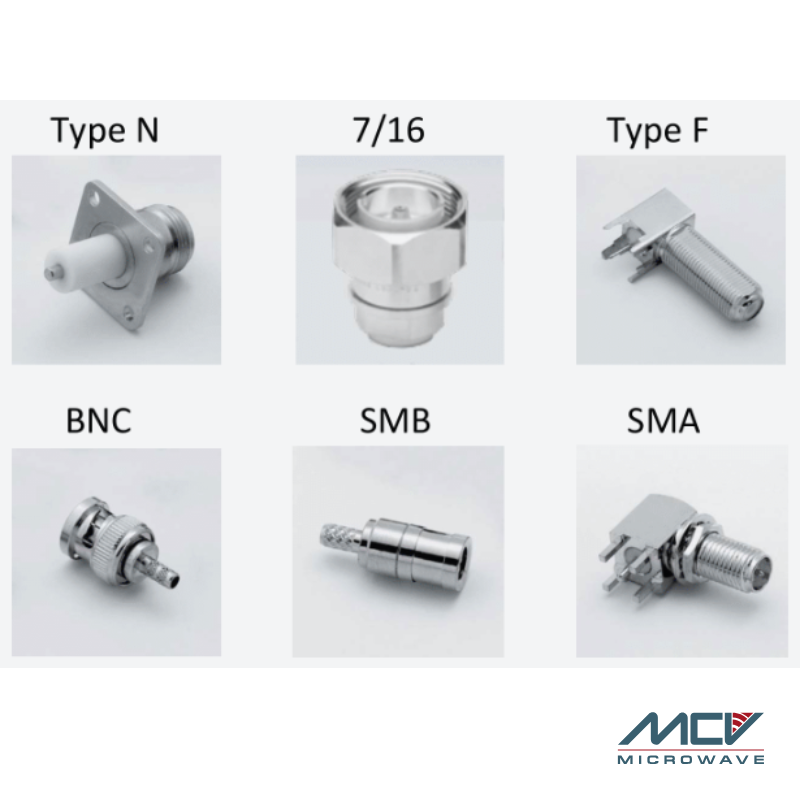
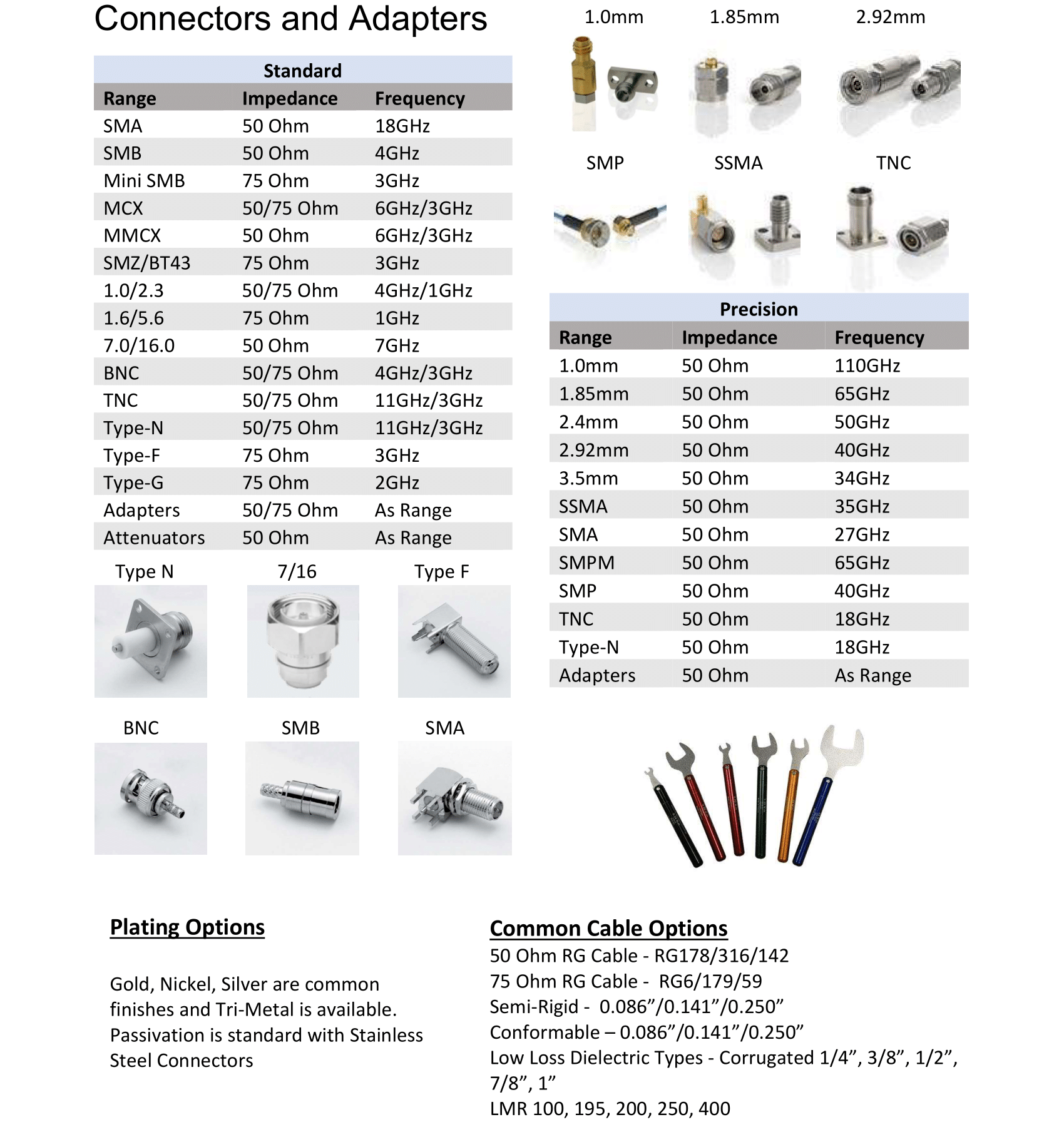
MCV RF connectors are precision-engineered for superior electrical performance, low VSWR, and repeatable connectivity across wide frequency bands. Available in a broad range of standard types—including SMA, N-Type, TNC, and 2.92mm—they support a wide variety of system requirements in telecommunications, aerospace, test and measurement, defense, and industrial RF networks. Built to withstand harsh environmental conditions, MCV RF connectors deliver dependable, high-quality signal transfer in both field and laboratory settings.
FAQ about RF Connectors
What is an RF connector?
An RF (Radio Frequency) connector is a type of electrical connector designed to work with radio frequencies, typically from a few MHz up to several GHz. It allows efficient transmission of RF signals between cables, antennas, and electronic equipment while maintaining impedance and minimizing signal loss.
What are the common types of RF connectors?
Popular RF connector types include:
-
SMA (SubMiniature A) – up to 18 GHz
-
N-Type – up to 11 GHz
-
BNC (Bayonet Neill–Concelman) – up to 4 GHz
-
TNC (Threaded Neill–Concelman) – up to 11 GHz
-
7/16 DIN – high-power RF applications
-
MCX / MMCX – compact connectors for mobile and embedded systems
What is the difference between 50-ohm and 75-ohm RF connectors?
The impedance value determines how well the connector matches the system:
-
50-ohm connectors are used in data, RF communication, and test equipment.
-
75-ohm connectors are used for video, broadcast, and CATV applications.
Using mismatched impedances can cause reflections and signal degradation.
What materials are RF connectors made from?
Typical materials include:
-
Body: Brass, stainless steel, or aluminum
-
Plating: Nickel, gold, or silver for corrosion resistance and conductivity
-
Insulator: PTFE (Teflon) or other low-loss dielectric materials
How do RF connectors affect signal performance?
Poor-quality or mismatched connectors can introduce insertion loss, VSWR (Voltage Standing Wave Ratio) degradation, and signal reflections. High-quality connectors are designed for low-loss performance and precise impedance matching.
How do I choose the right RF connector for my application?
Consider these factors:
-
Connector type and mating interface
-
Frequency range
-
Impedance (50 or 75 ohms)
-
Power handling
-
Environmental conditions (temperature, vibration, moisture)
-
Cable type and size
What is VSWR, and why is it important?
VSWR (Voltage Standing Wave Ratio) measures how efficiently RF power is transmitted through the connector and cable system. A low VSWR (close to 1:1) indicates minimal signal reflection and good impedance matching.
Are RF connectors gendered?
Yes. RF connectors come in male and female versions:
-
Male connectors typically have a center pin.
-
Female connectors have a center socket.
Adapters are available to convert between genders or connector types.
Can different RF connector types be mated together?
Not directly. Each RF connector type has a unique mechanical design. However, RF adapters can be used to connect different types (e.g., SMA to BNC, N-type to TNC) safely and effectively.
What is insertion loss in an RF connector?
Insertion loss refers to the amount of signal power lost when the RF signal passes through the connector. High-quality RF connectors are designed to minimize insertion loss, especially in high-frequency applications.
Can RF connectors be used outdoors?
Yes, many RF connectors are designed for outdoor and harsh-environment applications. Weatherproof connectors often include sealing gaskets, corrosion-resistant materials, and IP-rated protection against moisture and dust.
What is the mating cycle life of an RF connector?
Mating cycle life indicates how many times a connector can be connected and disconnected while maintaining reliable performance. Depending on the connector type and quality, RF connectors may support hundreds or thousands of mating cycles.
Why is proper connector torque important?
Correct torque ensures a secure electrical and mechanical connection without damaging the connector. Under-tightening can cause poor signal performance, while over-tightening may damage threads or internal components.
Can RF connectors support high-frequency microwave applications?
Yes. Precision RF connectors such as SMA, 2.92 mm, 2.4 mm, and 1.85 mm connectors are specifically designed for microwave and millimeter-wave frequencies reaching 40 GHz, 50 GHz, or higher depending on the connector type.
What are the typical applications of RF connectors?
RF connectors are widely used in:
-
Wireless communication systems (Wi-Fi, cellular, satellite)
-
Antenna and radar systems
-
Test and measurement equipment
-
Military and aerospace electronics
-
Broadcast and cable TV infrastructure
What are the typical applications of RF connectors?
RF connectors are widely used in:
-
Wireless communication systems (Wi-Fi, cellular, satellite)
-
Antenna and radar systems
-
Test and measurement equipment
-
Military and aerospace electronics
-
Broadcast and cable TV infrastructure
Are RF connectors reusable?
Most RF connectors can be reused if handled and maintained properly. However, repeated mating and de-mating can wear down the connector interface, especially in high-precision applications, so inspection and replacement are recommended over time.
How can I order RF connector from MCV Microwave?
To place an order for RF connector please contact us and we will help you!