
DIPLEXERS
Performance, reliability and quality with RF Diplexers
We specialize in delivering precision-engineered diplexers designed to optimize signal separation and minimize interference. Our product range includes solutions tailored for a wide variety of applications where performance, reliability, and quality are critical.
-
Cavity Diplexers: Built for high-power and high-selectivity applications, our cavity diplexers offer excellent isolation and low insertion loss across challenging frequency bands.
-
LC Diplexers: Compact and efficient, our LC diplexers provide superior filtering performance in systems where space and cost efficiency are key considerations.
-
Low PIM Diplexers: Designed for modern communication networks, our low PIM (Passive Intermodulation) diplexers ensure outstanding signal clarity and are ideal for high-performance wireless and distributed antenna systems (DAS).
-
Ceramic Diplexers: Compact and highly stable, our ceramic diplexers deliver precise filtering in space-constrained designs without compromising performance.
Whatever your system requirements, our diplexers are engineered to deliver exceptional results. Explore our solutions and find the right fit for your project.
Find the right Diplexer for your project
Cavity Diplexers
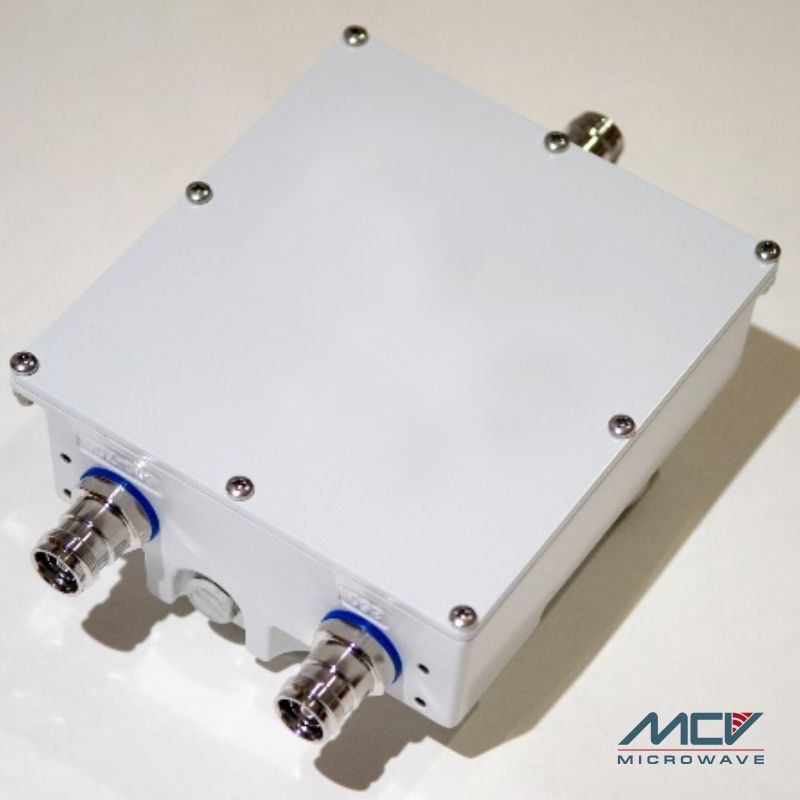
LC Diplexers

Low PIM Diplexers
Ceramic Diplexers
FAQ about Diplexers
What is a diplexer and what is it used for?
A diplexer is a passive RF component used to separate or combine two different frequency bands through a common port. It enables simultaneous transmission and reception or the use of multiple systems over a single antenna without interference.
How does a diplexer work?
A diplexer uses two bandpass filters, each tuned to a different frequency band. It routes each signal to the appropriate port while rejecting the other, ensuring minimal interference between the two bands.
What is the difference between a diplexer and a duplexer?
While both separate signals, a diplexer handles different frequency bands and routes them to different ports. A duplexer, on the other hand, is typically used in transceivers to allow simultaneous transmit and receive on the same antenna using closely spaced frequencies.
Where are diplexers commonly used?
Diplexers are widely used in telecommunications, satellite systems, GPS receivers, broadcasting equipment, and wireless networks, anywhere multiple frequencies need to be handled by a shared RF path or antenna.
What frequency ranges can diplexers handle?
Diplexers can operate across a wide frequency spectrum, from VHF/UHF (e.g., 100 MHz) up to millimeter-wave bands (e.g., 40+ GHz), depending on the application and design.
What is insertion loss in a diplexer, and why is it important?
Insertion loss is the amount of signal power lost when passing through the diplexer. Lower insertion loss means better signal quality and efficiency, which is especially important in low-power or sensitive RF systems.
What is port isolation in a diplexer?
Isolation refers to how well the diplexer prevents signal leakage from one frequency band into the other. High isolation (e.g., 30–60 dB) ensures that signals from one port do not interfere with the other.
Can a diplexer be used in reverse (to combine signals)?
Yes. Diplexers are bidirectional passive devices. They can be used to either split a combined signal into two frequency bands or combine two signals into one path, provided power levels and impedance are correctly matched.
What is return loss (or VSWR) in a diplexer, and why does it matter?
Return loss measures how much signal is reflected back due to impedance mismatch. Good return loss (typically better than 15–20 dB) ensures efficient power transfer, protects transmitters, and minimizes signal distortion in RF systems.
What is Passive Intermodulation (PIM), and why is it important in diplexers?
PIM occurs when high-power signals mix within passive components, creating unwanted interference. Low-PIM diplexers are essential in cellular, DAS, and telecom applications to maintain signal integrity, especially in dense RF environments.
How much power can a diplexer handle?
Power handling depends on design, materials, and frequency range. Diplexers may handle anything from a few watts in compact systems to several kilowatts in broadcast or military applications. Always verify both average and peak power ratings.
What is the difference between a diplexer and a triplexer or multiplexer?
A diplexer handles two frequency bands, while a triplexer handles three. Multiplexers manage more than three bands. The choice depends on how many frequency bands must share a single antenna or RF path.
Can diplexers be used in outdoor or harsh environments?
Yes. Many diplexers are designed for harsh conditions and can be ruggedized for outdoor, aerospace, or defense use. Features may include sealed housings, wide temperature ranges, vibration resistance, and corrosion-resistant materials.
What is the difference between a diplexer and a splitter?
A splitter divides the same frequency range into multiple output paths, while a diplexer separates or combines different frequency bands. Diplexers use frequency-selective filters to prevent interference between the connected systems.
Can diplexers be customized for specific frequency bands?
Yes. Diplexers can be custom designed for specific frequency ranges, bandwidths, power levels, connector types, and environmental requirements. Custom designs are common in telecom, aerospace, military, and satellite applications.
Are diplexers used in 5G and modern wireless systems?
Yes. Diplexers are widely used in 4G/5G infrastructure, distributed antenna systems (DAS), and wireless communication networks to combine multiple frequency bands onto shared antennas while maintaining high isolation and low signal loss.
What connector types are commonly used with diplexers?
Common connector types include SMA, N-type, TNC, 7/16 DIN, and waveguide flanges, depending on the operating frequency and power level. Connector selection affects insertion loss, power handling, and mechanical compatibility.
How are diplexers tested and verified?
Diplexers are typically tested using a Vector Network Analyzer (VNA) to measure insertion loss, return loss, isolation, and bandwidth. High-power and low-PIM designs may also undergo thermal, vibration, and intermodulation testing to ensure reliable performance.
How do I choose the right diplexer for my application?
Key selection criteria include frequency range, insertion loss, isolation, return loss, power handling, impedance (usually 50 ohms), size, and environmental requirements (e.g., temperature, vibration resistance).
What makes MCV diplexers unique?
MCV diplexers are engineered for high performance across a wide frequency spectrum. Available in ceramic, low PIM, and waveguide designs, they offer low insertion loss, high isolation, and rugged construction—ideal for telecom, aerospace, defense, and industrial environments.
How can I order diplexers from MCV Microwave?
To place an order for diplexers please contact us and we will help you!