
RF Cables
Engineered to transmit high-frequency signals with minimal loss, RF cables are critical components in ensuring efficient signal transmission across RF systems. Whether used in lab testing, field deployments, or integrated system designs, these cables help maintain signal integrity over varying distances and environmental conditions.
RF Cables by MCV
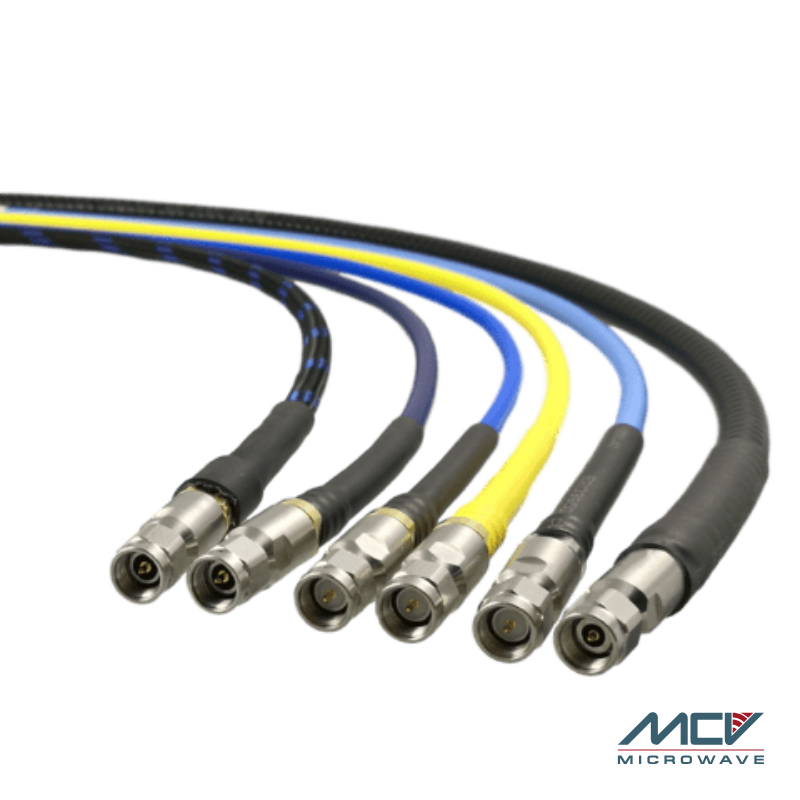
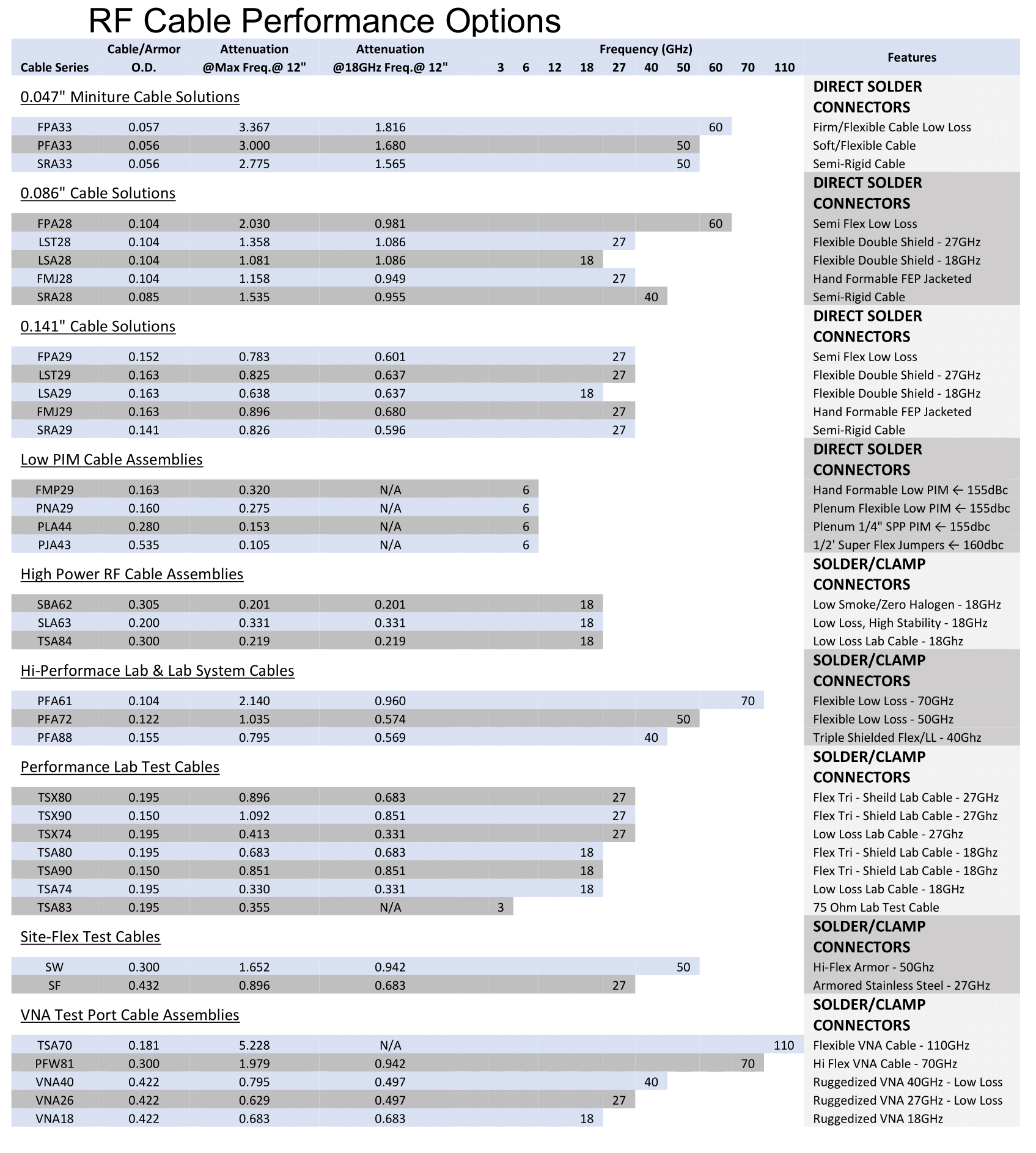
MCV RF cables are designed for high-performance signal transmission across a wide frequency spectrum. Built with low-loss dielectric materials and precision shielding, our cables ensure excellent electrical performance, flexibility, and durability. Available in multiple configurations and lengths—with compatible connectors such as SMA, N-Type, TNC, and 2.92mm—MCV RF cables are ideal for applications in telecommunications, defense, wireless infrastructure, and test and measurement environments. Engineered to withstand rugged conditions, MCV cables deliver reliable connectivity wherever consistent signal quality is essential.

FAQ about RF Cables
What is an RF cable?
An RF (Radio Frequency) cable is a specialized coaxial cable designed to transmit high-frequency signals with minimal loss and interference. These cables are used to connect antennas, transmitters, receivers, and RF instruments in communication and test systems.
What are the main types of RF cables?
Common types include:
-
Coaxial cables (e.g., RG-58, RG-142, RG-400)
-
Semi-rigid cables for high-frequency stability
-
Flexible cables for general-purpose use
-
Low-loss cables (e.g., LMR series) for long-distance signal transmission
How does an RF cable work?
An RF cable carries alternating current (AC) signals along its center conductor while the outer shield prevents electromagnetic interference (EMI). The dielectric insulator between them maintains a consistent impedance and minimizes signal reflection.
What is cable impedance, and why is it important?
Impedance (measured in ohms) represents the opposition to signal flow in the cable.
-
50-ohm cables are used for RF communications and test equipment.
-
75-ohm cables are used for video, broadcast, and CATV systems.
Matching the system’s impedance ensures minimal signal reflection and power loss.
What factors affect RF cable performance?
Key factors include:
-
Frequency range
-
Cable length
-
Attenuation (signal loss)
-
Shielding effectiveness
-
Temperature and environmental conditions
-
Connector quality
What is attenuation in an RF cable?
Attenuation is the signal loss that occurs as the signal travels through the cable. It’s measured in decibels (dB) per unit length and increases with frequency and cable length. Low-loss cables minimize this effect.
How do I choose the right RF cable for my application?
When selecting an RF cable, consider:
-
Operating frequency
-
Required cable length
-
Power handling capability
-
Flexibility needs (rigid vs. flexible)
-
Environmental exposure (indoor, outdoor, high-temperature, etc.)
-
Connector compatibility
What is the difference between flexible and semi-rigid RF cables?
-
Flexible RF cables use braided shields and are easy to route but may have slightly higher loss.
-
Semi-rigid RF cables use a solid metal outer conductor, offering superior shielding and phase stability, ideal for high-precision or high-frequency applications.
How do you minimize signal loss in RF cable installations?
To reduce loss:
-
Use shorter cable lengths
-
Choose low-loss cable types
-
Ensure proper impedance matching
-
Use high-quality connectors and secure terminations
-
Avoid sharp bends or physical damage to the cable
What are the typical applications of RF cables?
RF cables are used in:
-
Wireless communication systems
-
Antenna and radar connections
-
Test and measurement setups
-
Broadcasting and satellite systems
-
Aerospace and defense electronics
-
IoT and 5G infrastructure
How does cable length affect RF performance?
Longer cables generally result in higher insertion loss, which can degrade signal strength. It’s important to select a cable type and length that balances flexibility with acceptable signal attenuation.
What is shielding effectiveness in an RF cable?
Shielding effectiveness refers to the cable’s ability to prevent external electromagnetic interference (EMI) from affecting the transmitted signal and to minimize signal leakage from the cable itself. Higher shielding performance is especially important in high-frequency and noisy environments.
What is the minimum bend radius of an RF cable?
The minimum bend radius is the smallest radius the cable can be bent without damaging its structure or degrading performance. Exceeding this limit may increase signal loss, change impedance characteristics, or shorten cable life.
Can RF cables be used in outdoor environments?
Yes, many RF cables are designed for outdoor use with UV-resistant jackets, moisture protection, and weather-resistant materials. Outdoor installations should also use properly sealed connectors to prevent water ingress.
What is phase stability in an RF cable?
Phase stability refers to the cable’s ability to maintain consistent electrical phase performance during movement, temperature changes, or bending. It is critical in phased-array antennas, aerospace systems, and precision test applications.
How much power can an RF cable handle?
Power handling depends on the cable size, materials, frequency, and cooling conditions. Larger-diameter cables generally support higher power levels, while power capacity decreases as operating frequency increases.
What types of connectors are available for RF cables?
RF cables can be terminated with various connectors such as SMA, N-Type, TNC, BNC, and 2.92mm, depending on system compatibility and frequency requirements.
How can I order RF cable from MCV Microwave?
To place an order for RF cable or any other passive products please contact us and we will help you!