
In-Band Combiners
Designed to combine multiple transmit or receive signals within the same frequency band, In-Band Combiners are essential for maximizing spectrum efficiency and minimizing hardware footprint in complex RF systems. These passive components enable multiple radios to operate on the same band using a shared antenna system, all while maintaining signal integrity and preventing interference.
- Provides low-loss splitting (or combining) of separate frequency bands
- High Isolation / Low Loss
- Outdoor and indoor configurations
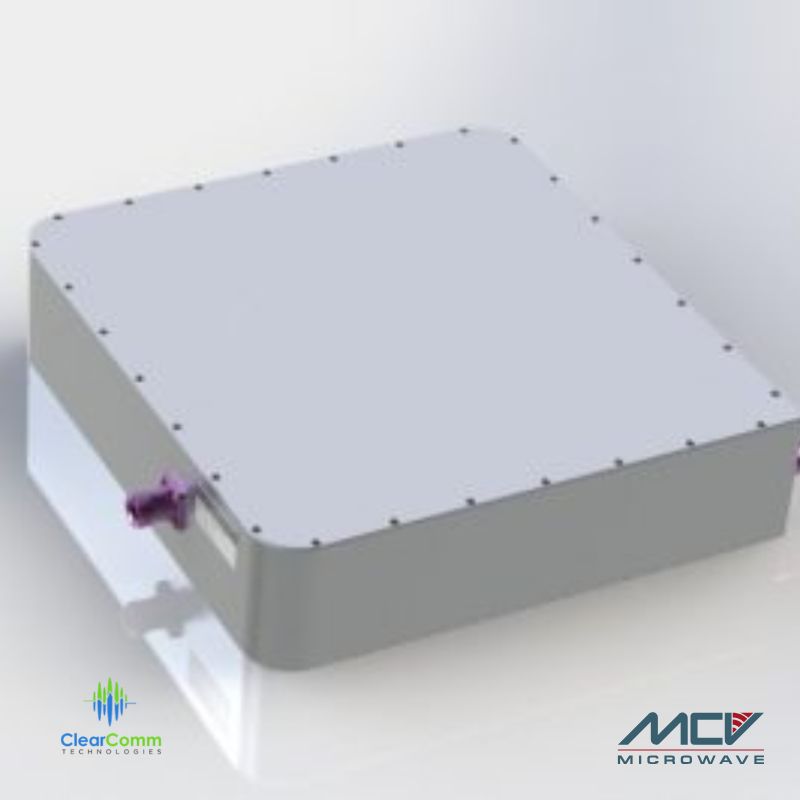
ClearComm In-Band Combiners by MCV
ClearComm In-Band Combiners by MCV are precision-engineered for excellent isolation, low insertion loss, and high power handling across a shared frequency range. Built to meet the demands of high-density RF environments, our in-band combiners are available in rugged connectorized enclosures suitable for indoor and outdoor use.
Ideal for wireless infrastructure, public safety networks, defense communications, and DAS systems, MCV’s in-band combiners ensure reliable performance, reduced system complexity, and optimized spectrum utilization in mission-critical deployments.
In-Band Combiner models and band types
FAQ about in-band combiners
What is an In-band Combiner?
An In-band Combiner is a device used to combine multiple RF signals that operate within the same frequency band onto a single antenna or transmission line, without causing interference between the signals.
How does an In-band Combiner work?
It uses filters (like cavity or hybrid couplers) and isolation techniques to allow multiple transmitters or receivers operating at similar frequencies to share the same antenna infrastructure, while minimizing interference and signal loss.
What are common applications of In-band Combiners?
In-band Combiners are widely used in:
-
Cellular base stations (e.g., GSM, LTE)
-
Public safety communications (e.g., police, fire)
-
Broadcasting (radio and TV)
-
Repeater systems
-
Distributed antenna systems (DAS)
What is the difference between In-band and Out-of-band Combiners?
-
In-band Combiners: Combine signals in the same frequency band, requiring careful filtering to avoid interference.
-
Out-of-band Combiners: Combine signals in different frequency bands, typically with less complex filtering.
What are the key benefits of using an In-band Combiner?
-
Reduces the number of antennas needed
-
Saves space and infrastructure cost
-
Improves network efficiency
-
Enables frequency reuse within limited spectrum
What are the main challenges of using In-band Combiners?
-
Requires precise filtering and isolation
-
Can cause insertion loss (signal attenuation)
-
Complex design, especially with high power or multiple carriers
-
Potential for intermodulation distortion
What types of filters are used in In-band Combiners?
Common filter types include:
-
Helical filters
These help isolate each signal path while allowing them to share an antenna.
How many channels can an In-band Combiner handle?
This depends on the design and frequency spacing between channels. Some high-end combiners can support multiple carriers (e.g., 4, 8, or more), but increased complexity and cost are involved.
Do In-band Combiners affect signal quality?
Yes, there may be some insertion loss and potential for intermodulation, but a well-designed combiner will keep these to a minimum, maintaining acceptable performance levels.
Can In-band Combiners be used for both transmitting and receiving?
Yes, but care must be taken to separate transmit and receive paths, especially in duplex systems, to avoid desensitizing receivers. Sometimes duplexers or circulators are used in conjunction.
What is the power handling capability of an In-band Combiner?
Power handling depends on the design and application. High-power broadcast or public safety systems may require combiners that handle hundreds of watts per channel, while cellular applications may operate at lower power levels. Proper thermal design and high-quality components are essential to ensure reliable performance under continuous operation.
How much frequency spacing is required between channels?
The required frequency spacing depends on the filter selectivity and isolation performance of the combiner. Narrow spacing demands higher-Q filters and tighter engineering tolerances. Insufficient spacing can increase insertion loss and intermodulation distortion, potentially degrading system performance.
What is intermodulation (IMD) and why is it important?
Intermodulation distortion (IMD) occurs when multiple high-power signals mix within nonlinear components, generating unwanted frequencies. In mission-critical systems—such as public safety or cellular networks—low IMD performance is essential to prevent interference with adjacent channels. High-quality materials and precision tuning help minimize IMD.
What is PIM (Passive Intermodulation) and how does it affect performance?
Passive Intermodulation (PIM) is caused by nonlinearities in passive components like connectors, cables, or filters. In multi-carrier systems such as LTE and 5G, low-PIM performance is critical to maintain receiver sensitivity and network reliability. In-band combiners used in modern cellular systems are often designed and tested to meet strict low-PIM requirements.
What should be considered when installing an In-band Combiner?
Key installation considerations include proper grounding, adequate ventilation, correct torque on RF connectors, and ensuring impedance matching (typically 50 ohms). Environmental factors—such as temperature, humidity, and vibration—should also be considered, especially in outdoor or mission-critical deployments.
What level of isolation is typically provided by an In-band Combiner?
Isolation performance varies by design, but high-quality in-band combiners typically provide significant isolation between channels to prevent transmitter interaction and interference. The required isolation level depends on system power, channel spacing, and regulatory requirements. Higher isolation generally improves system reliability and reduces the risk of intermodulation products.
Can multiple radio systems share a single antenna using an In-band Combiner?
Yes. One of the primary purposes of an in-band combiner is to allow multiple transmitters operating within the same frequency band to share a common antenna system. This reduces tower loading, antenna clutter, and installation costs while maintaining proper signal separation through filtering and isolation.
Are In-band Combiners scalable for future system expansion?
Many in-band combiner systems can be designed with future expansion in mind. Additional channels may be added if sufficient frequency spacing and system capacity are available. Planning for expansion during the initial design phase can help reduce future upgrade costs and minimize service interruptions.
How often does an In-band Combiner require maintenance?
In-band combiners generally require minimal maintenance, but periodic inspections are recommended. Technicians should verify connector integrity, check for signs of corrosion or water ingress, confirm proper grounding, and perform performance testing to ensure insertion loss, isolation, and PIM levels remain within specifications.
Can an In-band Combiner be customized for specific frequency plans?
Yes. Many manufacturers offer custom-tuned in-band combiners designed for specific frequency allocations, channel spacing requirements, power levels, and environmental conditions. Custom configurations help optimize performance and ensure compliance with the operational requirements of the network.
What makes MCV’s ClearComm in-band combiners stand out?
MCV’s ClearComm in-band combiners are designed for precision and durability, offering robust electrical performance and rugged packaging suitable for both indoor and outdoor environments in mission-critical RF deployments.
How can I order ClearComm In-Band Combiner from MCV Microwave?
To place an order for ClearComm In-band Combiner or any other RF products please contact us and we will help you!