
Ceramic Multiplexers
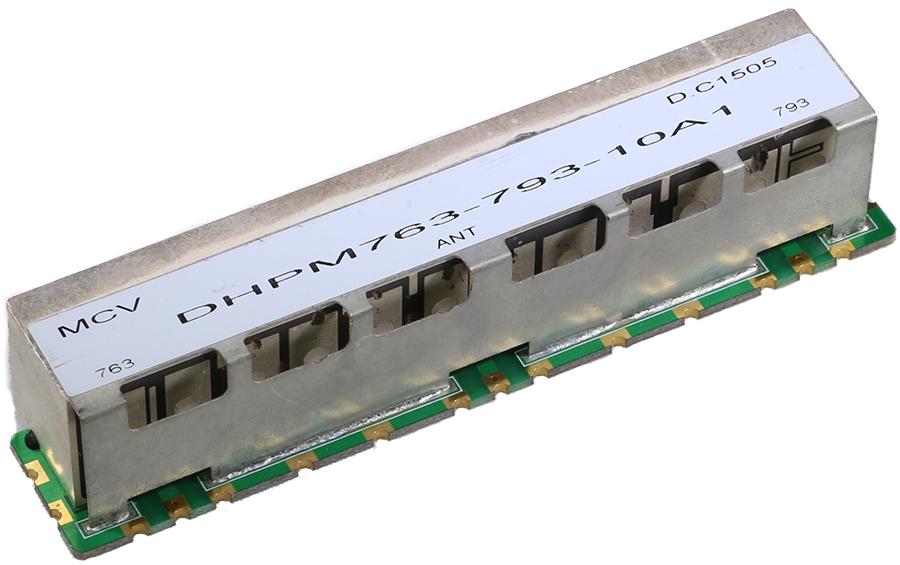
Ceramic multiplexers support more than the two frequency bands of a duplexer. Multiplexers with custom band combinations, including overlapping bands, can be designed and manufactured to meet your specifications. Ceramic multiplexers are compact, high-performance passive components designed to combine or separate multiple frequency bands within RF systems. Their precision-tuned design offers efficient channel isolation and minimal insertion loss, making them ideal for space-limited applications where performance and size are equally critical.
Ceramic Multiplexers by MCV
MCV ceramic multiplexers provide excellent electrical performance across various frequency bands in a lightweight, low-profile format. Designed for integration into dense RF environments such as mobile devices, wireless modules, and IoT systems, they are available in surface mount packages optimized for reliability and consistent performance in challenging operating conditions.
Ceramic Multiplexers
FAQ about Ceramic Multiplexers
What is a ceramic multiplexer?
A ceramic multiplexer is a compact RF component that uses ceramic resonators or dielectric materials to combine (multiplex) or separate (demultiplex) multiple frequency bands. They’re commonly used in wireless communication devices where space and performance are both critical.
How does a ceramic multiplexer work?
Ceramic multiplexers use dielectric resonators made from high-permittivity ceramic materials. These resonators filter specific frequencies by creating narrow bandpass or bandstop responses, allowing multiple channels to be routed through a single device with minimal interference.
What are the main advantages of ceramic multiplexers?
-
Small size and lightweight
-
High Q-factor for narrow bandwidth filtering
-
Excellent temperature stability (with proper material choice)
-
Low insertion loss and high channel isolation
-
Suitable for mass production with consistent performance
What applications use ceramic multiplexers?
-
Mobile phones (especially with multi-band operation)
-
Wi-Fi and Bluetooth modules
-
GNSS (GPS, Galileo, etc.) receivers
-
IoT devices
-
Base station components (small cell, repeaters)
What frequencies are ceramic multiplexers typically used for?
Ceramic multiplexers are commonly used from hundreds of MHz up to several GHz, typically in the 0.5–6 GHz range, depending on design. They’re ideal for cellular (LTE, 5G) and ISM band applications.
How do ceramic multiplexers compare to cavity or LC multiplexers?
| Feature | Ceramic Multiplexer | Cavity Multiplexer | LC Multiplexer |
|---|---|---|---|
| Size | Very small | Large | Small to medium |
| Frequency Range | 0.5–6 GHz | 1–40 GHz+ | Up to ~3 GHz |
| Q-factor | High | Very high | Moderate |
| Cost | Medium | High | Low |
| Integration | High (PCB/IC) | Low | Moderate |
Are ceramic multiplexers surface-mountable?
Yes, most ceramic multiplexers are designed as SMD (Surface Mount Devices), compatible with automated PCB assembly processes. They are often found in standard packages like 0805, 1206, or custom micro-packages.
What is the typical insertion loss of a ceramic multiplexer?
Insertion loss varies by design and frequency but typically ranges from 1 dB to 2.5 dB per channel. Lower insertion loss is critical for maximizing system efficiency and receiver sensitivity.
Are ceramic multiplexers temperature stable?
Yes. When made with temperature-compensated ceramic materials, they offer excellent thermal stability (±10 ppm/°C or better), making them reliable for use in environments with varying temperatures.
What are the power handling limits of ceramic multiplexers?
Ceramic multiplexers are generally designed for low to moderate RF power levels, typically from a few hundred milliwatts up to several watts, depending on size and design. They are well suited for mobile and embedded devices but are not ideal for high-power base station transmit paths.
Do ceramic multiplexers generate Passive Intermodulation (PIM)?
Ceramic multiplexers typically exhibit low PIM at low power levels, making them suitable for receivers and low-power transceivers. However, they are not optimized for ultra-low PIM performance in high-power multi-carrier systems, where cavity or specially designed low-PIM multiplexers are preferred.
How wide can the bandwidth of a ceramic multiplexer be?
Ceramic multiplexers excel at narrow to moderate bandwidths due to their high Q-factor. Very wideband designs are possible but usually involve trade-offs in insertion loss, isolation, or size. For ultra-wideband applications, LC or hybrid solutions may be more appropriate.
How consistent is performance in high-volume manufacturing?
Ceramic multiplexers are well suited for high-volume production due to tight material control and automated tuning processes. This results in excellent unit-to-unit consistency, making them ideal for consumer electronics and IoT devices.
How do I choose the right ceramic multiplexer for my design?
Key selection factors include:
-
Operating frequency and channel spacing
-
Required bandwidth and isolation
-
Acceptable insertion loss
-
Power level and linearity requirements
-
Package size and PCB layout constraints
-
Operating temperature range
Early RF simulation and layout consideration are critical to achieving optimal performance.
Can ceramic multiplexers be customized for specific applications?
Yes. We offer custom-tuned ceramic multiplexers for specific frequency bands, bandwidths, and performance targets. Customization may include package size, pin layout, and filter shape.
What channel configurations can ceramic multiplexers support?
Ceramic multiplexers are available in various configurations, including diplexers (2 channels), triplexers (3 channels), quadplexers, and higher-order multiplexers. The choice depends on the number of frequency bands that must coexist within a device while maintaining adequate isolation and low insertion loss.
How much isolation can a ceramic multiplexer provide?
Isolation performance depends on frequency spacing and filter design, but ceramic multiplexers typically provide between 30 dB and 60 dB of isolation between channels. Specialized designs may achieve even higher isolation for demanding wireless applications.
How do ceramic multiplexers support multi-radio devices?
Ceramic multiplexers enable multiple wireless technologies—such as cellular, Wi-Fi, Bluetooth, and GNSS—to share limited space within a device. By separating frequency bands efficiently, they help reduce interference and improve overall RF system performance.
What PCB design considerations are important when using ceramic multiplexers?
Proper PCB layout is essential for achieving specified performance. Designers should pay close attention to grounding, RF trace impedance, isolation from noisy digital circuits, component placement, and the manufacturer’s recommended land pattern. Poor layout can increase insertion loss and reduce isolation.
What is the typical reliability and lifespan of a ceramic multiplexer?
Ceramic multiplexers are highly reliable because they contain no moving parts and use stable dielectric materials. When operated within specified temperature, power, and environmental limits, they can maintain performance throughout the lifetime of the host device, often exceeding 10 years in commercial applications.
When should a ceramic multiplexer be selected instead of an SAW or BAW multiplexer?
Ceramic multiplexers are often chosen when designers need a balance of compact size, good power handling, low insertion loss, and cost-effective manufacturing. While SAW and BAW technologies can provide superior performance for specific frequency ranges and bandwidth requirements, ceramic multiplexers offer a versatile solution across many wireless applications.
How can I order ceramic multiplexers from MCV Microwave?
To place an order for ceramic multiplexers please contact us and we will help you!